

Last Updated: 25 October 2026
Quick Summary
Rotating shift work sleep patterns are disrupted because your circadian rhythm constantly resets instead of settling into a stable pattern. Each time your shifts change, your body struggles to adjust before being switched again, leaving you with broken sleep, exhaustion and difficulty concentrating.
- Your body needs 3 to 7 days to adjust to each new shift, but rotating rotas switch you before adaptation is complete.
- Light is the strongest signal your circadian rhythm receives; blackout curtains and dark sunglasses are essential tools after night shifts.
- Caffeine has a half-life of 5 to 6 hours, so avoid it from 2 hours before the end of a night shift if you need to sleep.
- If you have fewer than 11 hours between shifts, your body won't fully recover and sleep debt accumulates over weeks.
- Shift work sleep disorder is a recognised condition; speak to your GP if strategies aren't working or tiredness affects your safety.
Table of Contents
- How Rotating Shift Work Affects Your Circadian Rhythm
- Understanding Your Rotating Shift Work Sleep Schedule
- Why It's Harder to Sleep and How to Sleep After a Night Shift
- How Long to Sleep After a Night Shift: Finding Your Recovery Window
- Recognising Shift Work Sleep Disorder Symptoms
- Practical Strategies to Protect Your Sleep on Rotating Shifts
- When to Speak to Your GP About Shift Work Sleep Problems
- Frequently Asked Questions
How Rotating Shift Work Affects Your Circadian Rhythm
Your body runs on a clock. Not the one on your wrist, but an internal rhythm that tells you when to wake, when to sleep, and when to eat. This is your circadian rhythm, and it's built to follow the sun.
How does rotating shift work affect sleep patterns? The answer lies in understanding what happens when your working hours clash with your body's natural timing. Rotating shifts force your circadian rhythm to constantly reset. Learn practical steps to reset your circadian rhythm after night shifts. One week you're working nights. The next week you're on days.
The impact isn't just about feeling tired. When your circadian rhythm is disrupted, your body struggles to regulate temperature, digestion, hormone release, and immune function. Everything that depends on consistent timing goes wrong.
The NHS explains how shift work affects sleep and circadian rhythms
Understanding Your Rotating Shift Work Sleep Schedule
A rotating shift work sleep schedule is one where your working hours change regularly. You might work nights for a week, then switch to early mornings, then back to afternoons. This pattern repeats. Unlike a permanent night shift, where your body eventually adjusts, rotating shifts never give your circadian rhythm a chance to settle.
Here's a practical example. Imagine you work in a hospital or warehouse on a three-week rotation:
- Week 1: Nights (10 p.m. to 6 a.m.)
- Week 2: Mornings (6 a.m. to 2 p.m.)
- Week 3: Afternoons (2 p.m. to 10 p.m.)
- Week 4: Back to nights
Your body is constantly being asked to flip its sleep-wake cycle. Just when you've started adjusting to nights, you're switched to mornings. The adjustment period for each shift is typically 3 to 7 days. With rotating rotas, you never get there.
The challenge gets harder if you have caring responsibilities or a family. A rotating shift work sleep schedule doesn't just disrupt you, it disrupts everyone around you. Your partner might be sleeping when you need to be awake. Your children's school runs don't wait for your night shifts to end.
NICE guidance on shift work and circadian disruption
Here's how a typical three-week rotating rota disrupts your sleep-wake cycle.
| Week | Shift pattern | Hours | Adjustment challenge |
|---|---|---|---|
| 1 | Nights | 10 p.m. to 6 a.m. | Body begins adjusting |
| 2 | Mornings | 6 a.m. to 2 p.m. | Reset before adaptation complete |
| 3 | Afternoons | 2 p.m. to 10 p.m. | Another reset required |
| 4 | Back to nights | 10 p.m. to 6 a.m. | Cycle repeats without settling |
Why It's Harder to Sleep and How to Sleep After a Night Shift
Why is it so hard to sleep after a night shift? Your body has spent eight hours being told to stay alert. Adrenaline and cortisol have been flowing. Then you come home, the sun is up, the world is busy, and you're supposed to fall asleep. Your brain doesn't cooperate.
How to sleep after a night shift comes down to fighting against light and managing your body's alert state. Light is the most powerful signal your circadian rhythm receives. Sunlight tells your brain it's time to be awake. After a night shift, that's the last message you want.
Here's what actually helps:
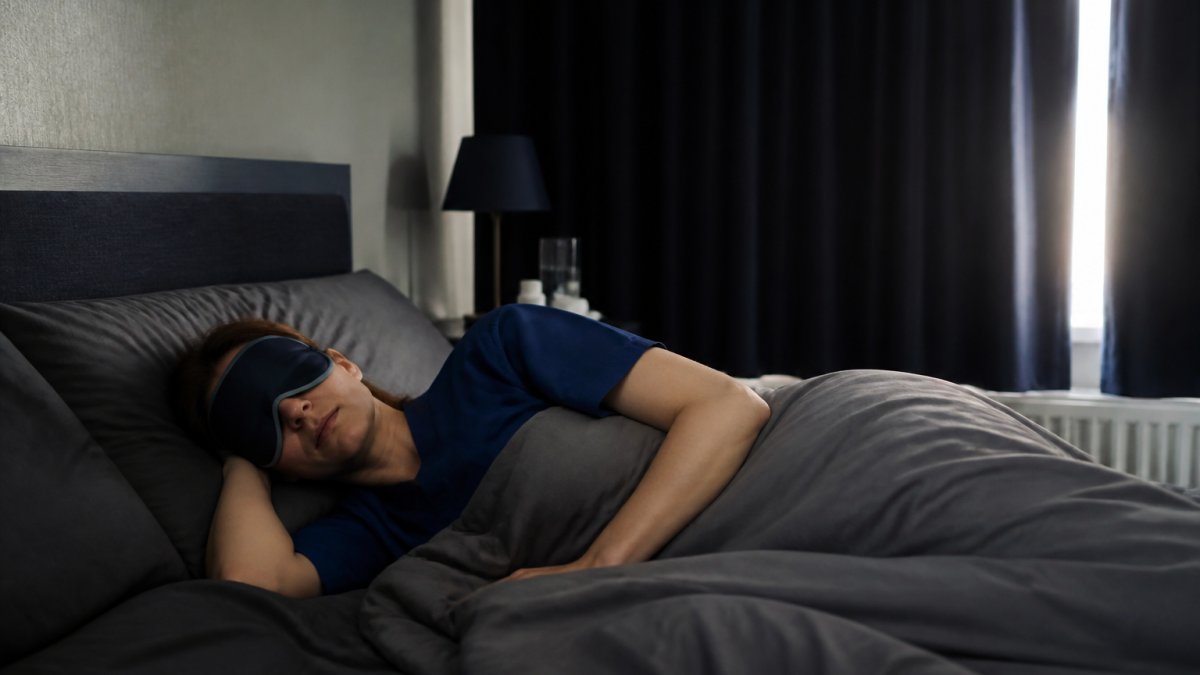
- Block out light completely. Blackout curtains, eye masks, and a dark bedroom are not luxuries, they're essential. Your brain needs to believe it's night, even if it's midday outside.
- Keep the room cool. A cooler environment signals sleep time to your body. Aim for around 16-18°C if you can manage it.
- Avoid screens for at least an hour before bed. Blue light from phones and laptops suppresses melatonin, the hormone that makes you sleepy.
- Use white noise or earplugs. The neighbour's lawnmower or the postman's knock can destroy a daytime sleep attempt before it starts.
- Eat lightly before sleep. Your digestive system is also on a circadian rhythm. A heavy meal can keep you awake when your body expects to be digesting at night, not day.
The hardest part is accepting that daytime sleep will feel different from night sleep. You might sleep less deeply. You might wake more easily. That's normal. Your body is working against its programming. Even imperfect sleep is better than none.
How Long to Sleep After a Night Shift: Finding Your Recovery Window
How long to sleep after a night shift depends on your next shift and how much recovery your body needs. There's no perfect answer that works for everyone, but there are guidelines that help.
If you have a full day or more before your next shift, aim for 7 to 8 hours. Your body needs proper recovery time. If you only have a few hours before returning to work, even 3 to 4 hours of solid sleep is better than staying awake. Quality matters more than quantity when you're time-limited.
Many shift workers find that a 90-minute sleep cycle works well. That's roughly one complete cycle of light sleep, deep sleep, and REM sleep. If you wake up after 90 minutes feeling reasonably rested, you might not need more.
The tricky part is the gap between shifts. If you finish a night shift at 6 a.m. and start an afternoon shift at 2 p.m., you have 8 hours. In theory, that's enough time to sleep and function.
If your rota gives you less than 11 hours between shifts, your body won't fully recover. You're accumulating sleep debt. Over weeks, that debt catches up with you in the form of increased mistakes, slower reactions, and mood changes.
Recognising Shift Work Sleep Disorder Symptoms
Shift work sleep disorder is different from ordinary tiredness from shift work. It's a recognised sleep condition that develops when your body can't adjust to your working pattern, even after weeks or months.
The main symptoms include:
- Insomnia during your designated sleep time. You lie in bed for hours unable to fall asleep, even though you're exhausted.
- Excessive daytime sleepiness. You struggle to stay awake during your shift, despite having slept.
- Difficulty concentrating. Your attention drifts. You make careless mistakes. Tasks that normally feel easy feel impossible.
- Mood changes. You feel irritable, anxious, or low. These feelings often improve when you're not working shifts.
- Reduced motivation. Tasks feel harder. Getting started on anything feels like pushing through thick fog.
- Physical symptoms. Headaches, stomach problems, and general aches are common.
The difference between ordinary shift work tiredness and shift work sleep disorder is persistence and severity. Everyone working shifts feels tired sometimes. Shift work sleep disorder means you're struggling most of the time, and it's affecting your work, your relationships, or your safety. Understand the specific daytime sleep challenges that characterise shift work sleep disorder.
HSE guidance on managing fatigue in shift workers
Practical Strategies to Protect Your Sleep on Rotating Shifts
You can't stop your rota from rotating, but you can help your body cope better. Discover evidence-based strategies to improve sleep quality while working rotating shifts.
Manage light exposure strategically. Light is the strongest signal your body receives. After a night shift, wear dark sunglasses on your journey home, even on cloudy days. The moment you get indoors, keep lights dim.
Eat at consistent times. Your digestive system is also on a circadian rhythm. Eating at the same time each day, regardless of your shift, helps anchor your body's internal clock.
Limit caffeine after a certain time. Caffeine has a half-life of 5 to 6 hours. A coffee at 4 a.m. is still half-active in your system at 10 a.m. If you need to sleep after a night shift, avoid caffeine from 2 hours before the end of your shift onwards.
Exercise, but time it carefully. Exercise is excellent for sleep quality, but timing matters. Exercise in the evening before a night shift can help you stay alert.
Use a consistent bedtime routine. Even 15 minutes of the same routine signals sleep time to your brain.
Consider a food supplement designed for shift workers. Noctiva Reset is formulated specifically for people working non-standard hours.

When to Speak to Your GP About Shift Work Sleep Problems
If you've tried these strategies and you're still struggling to sleep, or if your tiredness is affecting your work or safety, it's time to speak to your GP. Shift work sleep disorder is a real condition, and your GP can help.
Before your appointment, keep a simple sleep diary for a week or two. Note what time you tried to sleep, how long it took to fall asleep, how long you slept, and how you felt the next day.
Tell your GP about:
- How long you've been struggling (a few weeks versus several months matters)
- Whether the problem happens on all shifts or just certain ones
- What you've already tried
- How it's affecting your work, driving, or family life
Your GP might refer you to a sleep specialist. They might suggest cognitive behavioural therapy for insomnia, which is evidence-based and often very effective. In some cases, short-term sleep medication might help you through a difficult period, though medication alone won't solve the underlying circadian rhythm problem.
Be honest about safety. If your tiredness is affecting your ability to drive safely or concentrate during critical tasks, your GP needs to know. They can advise on what's safe and what adjustments might help.
Frequently Asked Questions
How does rotating shift work affect your sleep compared to working regular daytime hours?
Rotating shift work disrupts your body's circadian rhythm, the internal 24-hour cycle that controls sleep and wakefulness. When your shifts change frequently, your body struggles to adjust its sleep-wake signals. This misalignment means you may feel alert when trying to sleep and exhausted during your shift. Unlike a consistent night shift, rotating patterns prevent your body from adapting at all, making sleep disruption persistent rather than temporary.
What are the main symptoms of shift work sleep disorder?
Shift work sleep disorder symptoms include persistent difficulty falling or staying asleep, excessive daytime sleepiness during shifts, difficulty concentrating, mood changes, and reduced performance at work. You might also experience physical symptoms like headaches, stomach issues, or feeling unwell. If these symptoms persist across multiple rota cycles and affect your daily functioning, speak to your GP. They can rule out other sleep conditions and discuss management options tailored to your work pattern.
How long should you sleep after a night shift to feel recovered?
Most people need 7-9 hours of sleep per 24 hours, but after a night shift, you may only manage 4-6 hours in one block. Rather than aiming for one perfect sleep, many shift workers find two shorter periods, one after the shift and one later, works better. Quality matters as much as duration. A 5-hour uninterrupted sleep in a dark, quiet environment often feels more restorative than 8 fragmented hours. Your body's ability to enter deep sleep stages depends on darkness and consistency, not just hours alone.
Can anything help me sleep better when my shifts keep changing?
Yes. Light exposure is your most powerful tool: seek bright light at the start of your shift and avoid it before sleep. Keep your sleep space dark, cool and quiet, even during daytime. Maintain a consistent pre-sleep routine, a warm drink, a short walk or relaxation, to signal your body it's time to rest. Some people find short naps (20-30 minutes) before a night shift helpful, though timing varies by individual. If lifestyle changes aren't enough, speak to your GP about options suited to your rota.
Rotating shift work puts genuine strain on your body's natural rhythms. The strategies above help, but they're not perfect solutions, they're ways of managing an imperfect situation. If you're struggling despite trying these approaches, your GP is the right person to talk to. You're not weak or lazy. Your body is working against its own design, and that takes real effort to manage.
