

Last Updated: November 2, 2026
Quick Summary
The best eye mask for sleeping after a night shift is one that blocks light completely, fits without pressing on your eyes and stays comfortable for hours. Look for a contoured blackout design with an adjustable strap, as daylight is the main enemy of daytime sleep.
- A contoured sleep mask suits most night shift workers because eye cups keep fabric off your eyelids.
- Hold a mask up to a bright window: any light through the fabric is a fail.
- Wear sunglasses on the way home to cut morning light before you sleep.
- Never tumble-dry a contoured mask, as heat can warp the eye cups and crush the foam.
- A well-made mask should survive a year of regular use with gentle washing.
Table of Contents
- Why Light Is the Enemy of Daytime Sleep
- What Makes the Best Sleep Mask for Night Shift Workers
- Contoured Sleep Mask vs Flat Mask: Which Suits You?
- Choosing an Eye Mask for Daytime Sleep
- How to Sleep After a Night Shift: A Practical Routine
- Durability, Washing and Total Cost of Ownership
- Safety and Practical Limitations
- Build Your Own Wind-Down Kit
- Frequently Asked Questions
Why Light Is the Enemy of Daytime Sleep
Your body clock takes its cues from light, and that is the whole problem.
The NHS guidance on insomnia and sleep hygiene is clear that light exposure is one of the main drivers of your sleep-wake pattern.
That is where a blackout eye mask earns its place. It creates total darkness around your eyes, which helps your body settle into daytime sleep.
What Makes the Best Sleep Mask for Night Shift Workers
A good sleep mask for night shift workers blocks light well, fits without pressing on your eyes, and stays comfortable for several hours. Get those three right and you have a mask worth keeping.
A quick summary of what to weigh up:
| Feature | What to look for | Why it matters |
|---|---|---|
| Light blocking | Complete blackout, no leakage at nose or edges | Daylight is the main enemy of daytime sleep |
| Fit | Adjustable strap, contoured cups | Pressure and gaps both wake you up |
| Material | Breathable, soft, washable | Heat and skin sensitivity ruin comfort |
| Sleep position | Low profile for side sleepers | Bulk shifts the mask out of place |
Light Blocking and Blackout Performance
Blackout performance is the first thing to test. A good mask should stop light reaching your eyes from every angle, including the gap around your nose bridge. Look for a total blackout design with a moulded nose section, rather than a flat rectangle that lets light creep in at the bottom.
Cheap masks often look dark in the packet and leak badly in a bright bedroom. If you can see your hand through the fabric, it will not block a summer morning.
Fit, Adjustability and Face Shape
Fit is where most masks succeed or fail. An adjustable strap lets you loosen the mask enough to avoid pressure marks while keeping the edges sealed. Face shape matters too: a mask that suits a narrow face will gape on a broader one, and vice versa.
If you can, try before you buy or check the returns policy. A mask that leaves red lines across your cheeks after twenty minutes is not going to survive a full sleep.
Materials, Breathability and Skin Sensitivity
Materials decide whether you wake up clammy. Silk feels cool and smooth, which many people with sensitive skin find suits them. Foam and contoured masks can trap heat, so breathability matters.
If your skin reacts easily, choose a soft fabric cover and wash it regularly. A lightweight mask you barely notice beats a heavier one that feels luxurious for ten minutes and stifling by hour two.
Contoured Sleep Mask vs Flat Mask: Which Suits You?
A contoured sleep mask suits most night shift workers because the eye cups keep fabric off your eyelids and allow natural eye movement.
The trade-off is simple. Contoured masks, often called 3D designs, create cavernous eye space so you can blink and move your eyes freely. Flat masks are more compact and travel well, but they leave less room and can rub against your lashes.
Eye Cup Shape and Pressure Around the Eyes
Eye cup shape decides how the mask feels after an hour. Deep cups reduce pressure on the eyes and are kinder if you wear lash extensions or have sensitive eyes.
Watch out: a mask that presses on your eyelids can cause discomfort and even blur your vision briefly when you wake. If pressure is noticeable in the first minute, it will only get worse overnight.
Side Sleeping, Back Sleeping and Strap Comfort
Side sleeping is the real test. A bulky mask shifts against the pillow and ends up over one ear. A low-profile contoured mask with a wide headband holds its position better.
Back sleepers have more freedom, but strap comfort still counts. A thin elastic strap digs in; a broader, adjustable headband spreads the pressure. If you share a bed with someone on a different rota, a quiet, well-fitted mask also means you are less likely to wake them while settling down.
Choosing an Eye Mask for Daytime Sleep
An eye mask for daytime sleep should block light fully, fit your face without pressure, and stay comfortable for the length of your sleep. Judge it on those three, not on packaging or price alone.
Here is a simple checklist to run before you commit:
- Hold it up to a bright window: any light through the fabric is a fail
- Check the nose bridge: does it seal without pinching?
- Adjust the strap: can you loosen it without gaps appearing?
If you are weighing an eye mask against other sleep aids, our guide to whether sleep supplements are good for night shift workers sets out the honest pros and cons before you decide what to try.
How to Sleep After a Night Shift: A Practical Routine
Knowing how to sleep after a night shift comes down to a repeatable wind-down: block the light, cool the room, and give yourself a short buffer before bed. The mask is one part of that routine, not the whole of it.
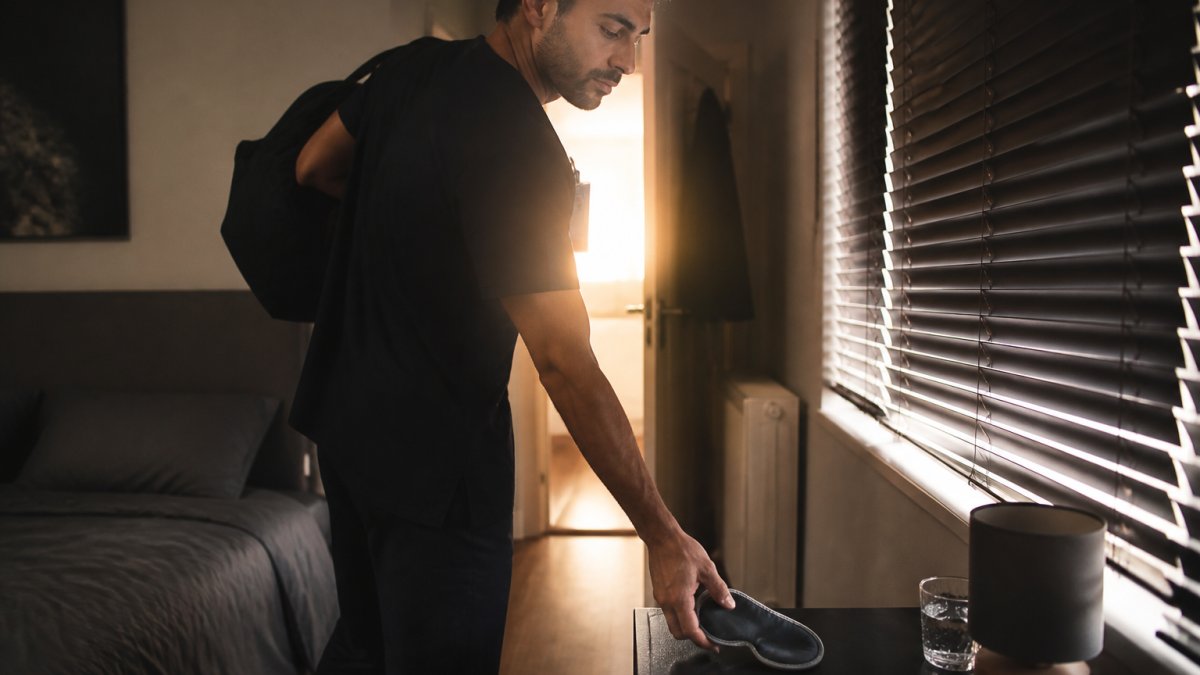
A simple routine that fits around a real rota:
- On the way home: wear sunglasses to cut morning light.
- At home: close blackout blinds, then put on your eye mask.
- Cool the room: a cooler bedroom helps you settle.
- Buffer time: keep the first twenty minutes calm, no scrolling.
- Protect the block: phone on silent, doorbell off if you can.
For a fuller look at building better rest around shifts, see our guide on how to improve sleep quality. If you struggle to stay awake during the shift itself, our piece on how to stay awake on night shifts covers the other half of the equation.
Durability, Washing and Total Cost of Ownership
Durability is where cheap masks quietly cost more. A mask that loses its shape or stretches after a few washes needs replacing, so the cheaper option is not always better value for money. But 'buy well' is easy to say and hard to judge from a product page. Here is what actually wears out, how to wash different materials without ruining them, and how to work out whether a mask is worth keeping.
What actually wears out first
In most masks, the failure points are predictable:
- The strap. Elastic loses tension over time, especially if it is washed in hot water or tumble-dried. A strap that has stretched will no longer hold the edges sealed, and you will find yourself tightening it further, which brings back the pressure marks.
- The stitching at the strap anchors. This is where the mask takes the most strain. Look for reinforced stitching or a stitched-in strap rather than a glued one.
- The nose-bridge wire or moulding. A wire that kinks or a foam insert that crushes will stop sealing. Once the nose section has gone, the mask leaks at the bottom edge.
A well-made mask should survive a year of regular use with gentle washing. If yours is losing its seal after a few weeks, the problem is usually the strap or the nose section, not the fabric.
How to wash different materials
The washing instructions matter as much as the mask itself, because heat and agitation are what shorten its life.
- Silk (including mulberry silk). Hand-wash in cool water with a gentle detergent, rinse well, and air-dry flat away from direct heat. Never tumble-dry silk; it will shrink and lose its smooth finish.
- Foam and contoured masks. Check whether the foam insert is removable. If it is, wash the cover only and air-dry the foam separately. If it is not, wipe the inner surface with a damp cloth and mild soap, then air-dry fully before use.
- Cotton and synthetic fabrics. Most survive a gentle machine wash at 30°C in a laundry bag, but avoid fabric conditioner, which can clog the weave and reduce breathability.
Wash regularly if you have sensitive skin or wear makeup on shift, as a build-up of sweat, sebum and makeup residue can cause irritation.
Working out total cost of ownership
Thinking about the overall cost of a mask over time is worth doing, especially if your rota changes every few weeks. The calculation is simple: divide the price by the number of nights you expect to use the mask before it needs replacing.
A few practical points:
- Replacement parts. Some contoured masks sell replacement straps or foam inserts separately. If yours does, a new strap can extend the life of the mask considerably.
- Washability. A mask you can wash easily is one you will actually wash, which keeps it comfortable and extends its life.
- Returns and guarantees. Check the returns policy before you buy. A mask that fails the fit test in the first week should go back, not into a drawer.
If you are weighing an eye mask against other sleep aids, our guide to whether sleep supplements are good for night shift workers sets out the honest pros and cons before you decide what to try.
Safety and Practical Limitations
An eye mask is a comfort aid, not a medical treatment. If you are consistently exhausted, speak to your GP (the NHS).
A few practical caveats. Masks can feel restrictive if you are congested or anxious in enclosed spaces.
Noise is the other limitation. If a noisy daytime environment is the problem, our article on noise reduction versus silence explains what headphones and quiet rooms can and cannot do.
Build Your Own Wind-Down Kit
Start with the basics: a blackout eye mask, blackout blinds, earplugs, a cool dark room and a consistent routine.
Noctiva Reset is a food supplement for adult shift workers, containing KSM-66® ashwagandha and 5-HTP, with a full dose declaration and no proprietary blends.
If you want to see whether it fits alongside your wind-down kit, you can explore Noctiva Reset and read the full ingredient information before deciding.
Frequently Asked Questions
What is the best eye mask for night shift workers?
There is no single best eye mask for everyone. Look for one that blocks light completely, fits your face without pressing on your eyes, and stays comfortable when you sleep on your side. A contoured sleep mask with adjustable straps and breathable fabric tends to suit night shift workers well, because it creates space around the eyes and reduces pressure. Try it on before you rely on it for daytime sleep.
Does wearing an eye mask during the day help with sleep?
An eye mask for daytime sleep can help by blocking light that signals your brain to stay awake. It is not a cure for night shift fatigue, but it removes one common barrier to rest. Pair it with blackout blinds, a cool room and a consistent wind-down routine. If sleep problems continue despite these steps, speak to your GP.
Are contoured sleep masks more comfortable than flat ones?
A contoured sleep mask often feels more comfortable because the eye cups create space around your eyes, so you can blink freely and avoid pressure on your eyelashes. Flat masks can press against the eyes, which some people find irritating. The trade-off is that contoured masks can be bulkier and may let light in around the nose if the fit is poor. Try both if you can.
How do I stop light getting in around my sleep mask?
Light leakage usually comes from a poor fit. Adjust the strap so the mask sits snugly but not tightly, and check the nose bridge area, which is a common gap. A contoured mask with a mouldable nose piece can help. If you sleep on your side, choose a mask with a low-profile strap. Blackout blinds behind the mask reduce the light that reaches the edges.
Building a routine that survives a rotating rota is harder than any single product. Noctiva Reset is made for adults working nights and late shifts, with a transparent formula, UK manufacturing and a 30-night satisfaction guarantee. Get started with Noctiva Reset and give your wind-down routine a supplement designed around shift work.
