

Table of Contents
- Why Caffeine Timing Matters on Night Shifts
- Building a Night Shift Caffeine Schedule
- How Much Caffeine Is Safe Per Day
- When to Stop Drinking Coffee Before Bed
- Caffeine Alternatives for Night Shift Workers
- Managing Caffeine on Rotating Shifts
- Conclusion
- Frequently Asked Questions
Last Updated: October 23, 2026
Why Caffeine Timing Matters on Night Shifts
Getting your caffeine timing on night shifts right can be the difference between a manageable shift and an exhausting one. When you're working against your body's natural rhythm, caffeine becomes a tool that either helps or hinders your rest when you finally get home.
The challenge is this: caffeine stays in your system for hours. If you drink it too late in your shift, it'll still be circulating when you're trying to sleep. Drink it too early, and you'll hit an energy crash mid-shift when you need focus most. Caffeine timing on night shifts isn't about avoiding coffee altogether, it's about using it strategically.
Your body produces cortisol naturally, which peaks in the morning for day workers. On night shifts, your cortisol rhythm shifts, but caffeine can still work with or against your energy levels depending on when you consume it. A thoughtful approach to caffeine timing helps you stay alert during your shift without sabotaging your sleep afterwards.
Building a Night Shift Caffeine Schedule
Creating a caffeine schedule means mapping out when you'll drink coffee, tea or other caffeinated drinks across your entire shift. This prevents both the mid-shift crash and the post-shift insomnia that comes from drinking caffeine too late.
Start by identifying your natural energy dips. Most night shift workers hit a low point around 3-4 hours into their shift, and another around 2 hours before the end. These are your prime times for caffeine. Space your drinks at least 3 hours apart so your body doesn't build tolerance, and your caffeine levels don't stack up dangerously.
Think about what you're drinking too. A cup of instant coffee has roughly 100 mg of caffeine. A strong espresso has about 75 mg. Tea typically contains 25-50 mg. Energy drinks vary wildly, some have 80 mg, others 300 mg. Knowing these amounts helps you control your total intake across the shift.
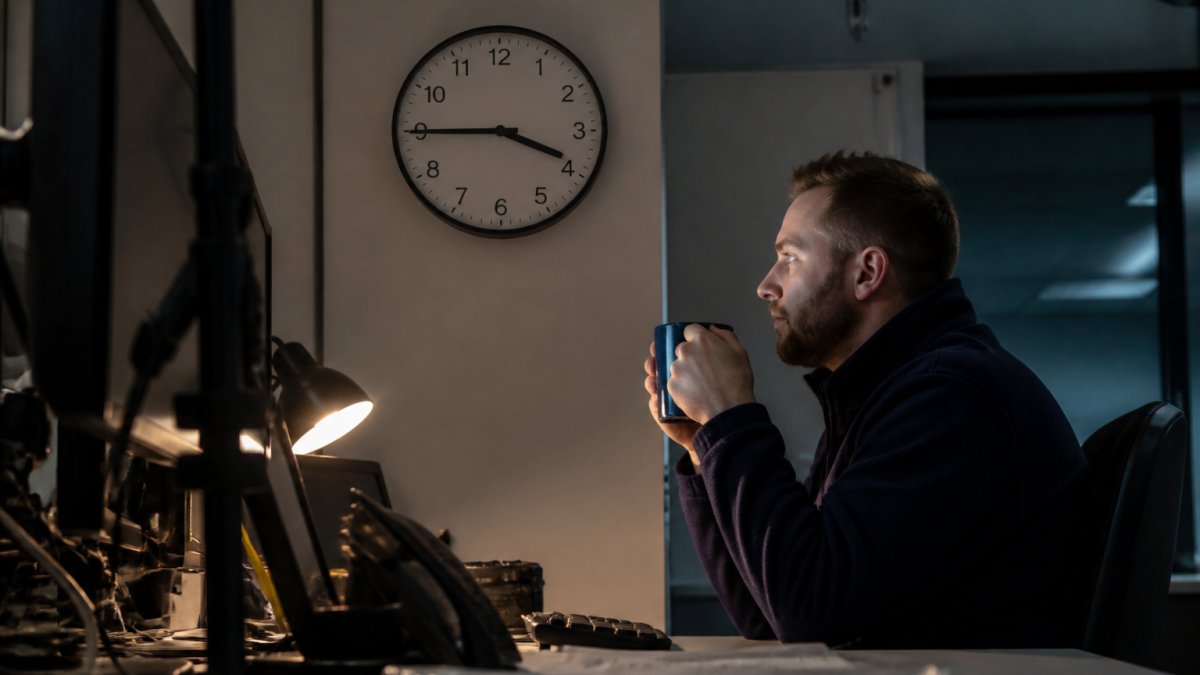
An Illustrative 12-Hour Night Shift Timetable
Here's how a practical caffeine schedule might look for a typical 12-hour night shift starting at 10 PM:
| Time | Activity | Caffeine Action | Notes |
|---|---|---|---|
| 10:00 PM | Shift starts | No caffeine yet | Natural adrenaline carries you |
| 10:30 PM | Settling into work | Small tea (30 mg) | Optional, only if you feel sluggish |
| 1:00 AM | Mid-shift energy dip | Coffee (100 mg) | Your main caffeine dose |
| 4:00 AM | Second energy low | Tea (40 mg) | Lighter than your first dose |
| 7:00 AM | Final hours | Water only | No caffeine after this point |
| 10:00 AM | Shift ends | Head home | Caffeine should be wearing off |
This timetable assumes a standard 12-hour shift. Your actual schedule might differ, if you finish at 6 AM instead of 10 AM, you'd skip the 4 AM caffeine entirely. The key principle remains: no caffeine in the final 3-4 hours of your shift.
If you work a shorter 8-hour shift, you might skip the second caffeine dose entirely. A single cup of coffee 3-4 hours into an 8-hour shift often works best.
How Much Caffeine Is Safe Per Day
Most adults can safely consume up to 400 mg of caffeine per day, according to guidance from health organisations. That's roughly equivalent to 4 cups of instant coffee, or about 10 cups of tea.
On a night shift, you're unlikely to hit that ceiling if you're spacing your drinks properly. Two cups of coffee and a couple of teas during a 12-hour shift puts you around 200-250 mg, which is well within safe limits.
However, "safe" doesn't mean "ideal for sleep." Just because you can drink 400 mg doesn't mean you should if you're trying to rest afterwards. Many night shift workers find they sleep better when they keep their caffeine intake to 150-200 mg per shift.
Individual sensitivity varies widely. Some people feel jittery after 100 mg; others barely notice 300 mg. If you're new to shift work, start conservatively and adjust based on how you feel. Pay attention to your heart rate, anxiety levels and sleep quality. If you're feeling more anxious than usual or sleeping poorly, caffeine might be the reason.
Certain medications and health conditions can make caffeine hit harder. If you're taking antidepressants or managing anxiety, chat with your GP before significantly increasing your caffeine intake. Pregnancy is another consideration, guidance suggests limiting caffeine to 200 mg per day when pregnant.
When to Stop Drinking Coffee Before Bed
The golden rule: no caffeine in the 4 hours before you plan to sleep.
Caffeine has a half-life of about 5 hours, meaning half the caffeine you consume is still in your system 5 hours later. A cup of coffee at 6 AM still has roughly 50 mg of caffeine in your body at 11 AM. That's why a late-shift coffee can wreck your morning sleep.
For most people, this means stopping caffeine 3-4 hours before bed. If you finish your shift at 10 AM and want to sleep by 1 PM, your last caffeine should be around 9-10 AM. If you're heading to bed at 2 PM, stop caffeine by 10 AM.
Some people metabolise caffeine faster than others. Smokers process it roughly twice as quickly as non-smokers. If you smoke, you might get away with stopping caffeine just 2-3 hours before sleep. If you don't smoke and you're sensitive to caffeine, you might need 5 hours.
The best way to find your personal window is to experiment. Track when you drink caffeine and how well you sleep. Most night shift workers discover their own sweet spot within a few weeks.
Caffeine Alternatives for Night Shift Workers
Not every energy dip needs caffeine. Sometimes what you actually need is movement, fresh air, or a proper break.
A 10-minute walk, even just around your workplace, can boost alertness as effectively as a cup of tea for the next hour or so. Your circulation improves, your brain gets oxygen, and you reset your focus. If you can step outside, even better.
Eating a small snack with protein and complex carbs works too. A cheese sandwich, a handful of nuts, or some Greek yogurt can sustain your energy for 2-3 hours without the caffeine crash.
Hydration matters more than most people realise. Dehydration feels like fatigue. If you're reaching for coffee at 3 AM, try a glass of water first. You might just be thirsty.
Some workplaces have quiet rooms or rest areas. A 15-minute nap, not a full sleep, just a proper rest, can reset your alertness for the final hours of your shift. This works best if you can manage it without guilt or workplace pressure.
For sustained energy without caffeine, look at your overall shift-work routine. Regular exercise, consistent meal times (even if they're unconventional), and good sleep hygiene on your days off all contribute to how alert you feel during shifts.
Managing Caffeine on Rotating Shifts
Rotating shifts make caffeine timing trickier because your sleep schedule keeps changing. A caffeine strategy that works on Monday's night shift might not suit Wednesday's late shift.
The solution is flexibility. On nights, use the 4-hour rule. On lates (say, 2 PM to 10 PM), you might finish work with natural daylight still around, so you can afford slightly later caffeine. On earlies, you're starting work when your body naturally wants to be alert, so you might not need caffeine at all.
Keep a simple log for a few weeks: what time you worked, when you drank caffeine, and how you slept. Patterns emerge. You'll notice that certain shift patterns consistently give you poor sleep, and you can adjust your caffeine strategy accordingly.
If you're rotating between nights and days, give yourself a transition day if possible. Your body needs time to adjust its rhythm. Aggressive caffeine use on a transition day often backfires, you'll be too wired to sleep when you finally need to.
Some rotating shift workers find it helpful to keep their caffeine intake low across all shifts, rather than ramping it up on nights. This prevents your body from becoming dependent on high doses and keeps your sleep more stable across different rotas.
Conclusion
Managing caffeine timing on night shifts comes down to three things: knowing when your energy dips, spacing your caffeine doses to cover those moments, and stopping early enough that it doesn't wreck your sleep.
Start with the 4-hour rule, no caffeine in the final 4 hours of your shift. Build your schedule around your actual energy patterns, not a generic template. And remember that caffeine is a tool, not a substitute for proper sleep, good nutrition, or looking after your overall health.
If you're consistently exhausted despite getting caffeine timing right, the issue might be deeper than just your coffee schedule. That's when it's worth looking at your overall shift-work routine: your sleep environment, your nutrition, your stress levels, and whether you're getting enough rest on your days off.
For many night shift workers, a thoughtful approach to caffeine, combined with good sleep habits and proper support for your body during unconventional hours, makes a real difference. If you'd like to explore additional support for managing shift work fatigue, Noctiva Reset is designed specifically for adults working nights and rotating rotas, with ingredients like magnesium and ashwagandha.

Getting your caffeine strategy right is one piece of managing night shift work well. But caffeine alone won't solve exhaustion if your body's nervous system is under constant strain. If you're interested in learning more about how to support your body through shift work, explore what Noctiva Reset offers.
Frequently Asked Questions
When should I drink caffeine during a night shift?
The best time to drink caffeine on a night shift is during the first half of your shift, ideally within the first two to three hours after you start work. This gives the caffeine time to peak when you need alertness most, before it begins to wear off. Avoid caffeine in the latter stages of your shift, especially in the final two to three hours before you finish, as it can interfere with your ability to sleep when you get home. A second, smaller dose midway through can help if your shift is particularly long, but timing is crucial.
How long before bed should I stop drinking coffee after a night shift?
Stop consuming caffeine at least four to six hours before you plan to sleep. Since caffeine has a half-life of around five hours, this means roughly half of what you've consumed will still be in your system after that time. If you finish a night shift at 6am and want to sleep by 8am, you should avoid caffeine after 2am. Individual sensitivity varies, so you may need to adjust this window based on how caffeine affects your own sleep quality.
How much caffeine is safe per day for shift workers?
The Food Standards Agency advises that healthy adults can safely consume up to 400 mg of caffeine daily, roughly equivalent to four cups of instant coffee. However, shift workers should consider consuming less, particularly on days when you're sleeping during the day. Spread your intake across your waking hours rather than concentrating it in one sitting. If you're sensitive to caffeine or struggle with sleep, aim for 200-300 mg daily and monitor how it affects your rest.
What can I use instead of caffeine to stay alert on night shifts?
Movement and light exposure are powerful alertness tools that don't carry caffeine's sleep-disrupting effects. A short walk, even around your workplace, increases blood flow and mental sharpness. Bright light, whether from a well-lit break room or a light therapy lamp, signals to your body that it's time to be awake. Short breaks, staying hydrated with water, and eating protein-rich snacks also help sustain alertness. Some shift workers find that structured breaks and social interaction with colleagues provide a natural energy boost without relying solely on caffeine.
